
How ARE’s Flush-Mount Locking Handle System Actually Keeps Your Truck Cap Secure and Weatherproof
A truck cap locking system does two jobs: keep thieves out and keep water out. ARE’s flush-mount design accomplishes both by hiding the lock mechanism inside the cap’s exterior skin and distributing locking force across multiple points along the door perimeter.
Unlike surface-mounted paddle handles that protrude and expose the lock cylinder to prying tools, our flush-mount system sits recessed into the door panel with a weatherproof gasket sealing the entire assembly. The handle itself becomes part of the cap’s aerodynamic profile instead of an add-on component.
This guide walks through the mechanical design, the multi-point latching sequence, and the weatherproofing details that make this locking architecture work in real-world conditions.
The Flush-Mount Housing and Why It Matters for Security
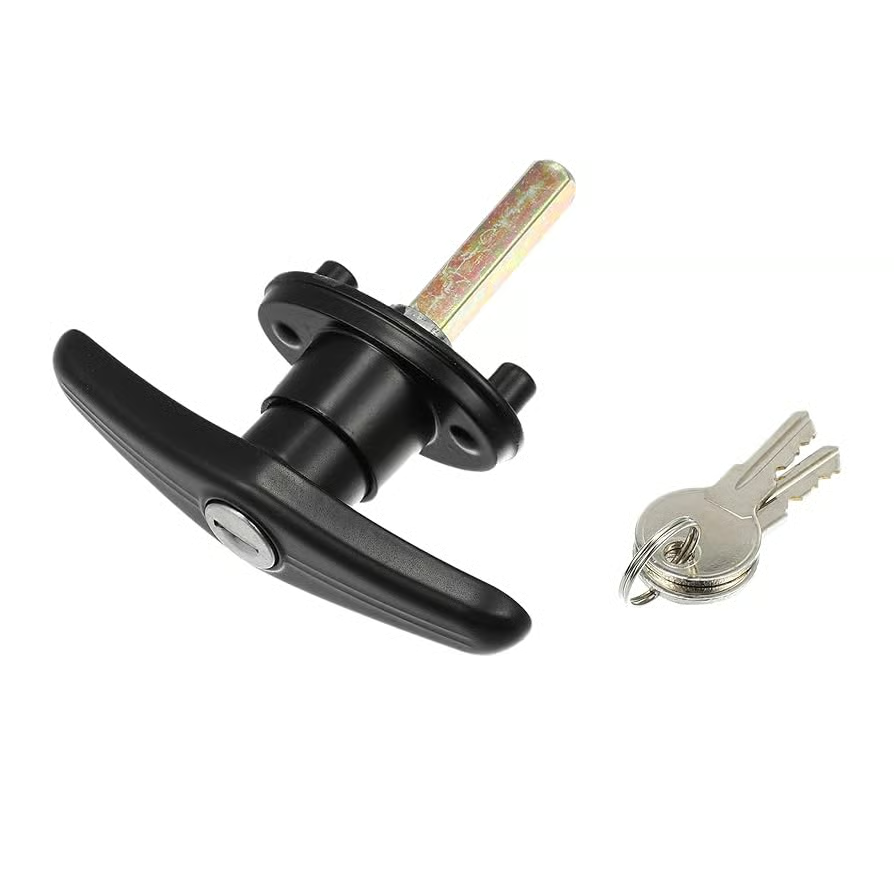
A flush-mount lock assembly sits inside a machined pocket in the fiberglass or aluminum door skin, leaving only the keyhole and a slim handle face exposed. The lock cylinder itself is sandwiched between the outer door panel and an inner reinforcement plate, making it nearly impossible to reach with a pry bar or drill bit.
Surface-mounted locks, by contrast, bolt onto the door’s exterior with exposed fasteners. A thief can attack the bolts, the housing, or the gap between the lock body and the door—three separate failure points. The flush design eliminates those gaps entirely.
Weatherproof Gasket Integration
The same recessed pocket that hides the lock also creates a natural seat for a compression gasket. When the door closes, the gasket compresses against the cap’s rear frame, sealing out rain and road spray. The lock housing itself never protrudes past the gasket plane, so water has no path to follow the mechanism inward.
Multi-Point Latching: How One Turn Engages Four Strikers
ARE’s system uses a rotating cam bar inside the door. When you turn the key, the cam bar rotates and pushes four latch arms outward simultaneously—one at each corner of the door perimeter. Each arm engages a separate striker plate mounted to the cap’s rear frame.
This distributes the locking force instead of concentrating it at a single point. Even if one striker loosens over time, the other three still hold the door tight against the weatherstrip. Anyone who has dealt with a rear door that won’t latch properly knows that misalignment at one corner often stems from a bent or shifted striker plate; in a single-point lock, that misalignment can compromise the entire seal, but a four-point system maintains weatherproofing even when one striker needs adjustment.
The Cam Bar Mechanism
The cam bar is a steel rod running horizontally inside the door’s perimeter. Quarter-turn of the key rotates the bar 90 degrees, which translates rotational motion into linear motion at each latch arm. Spring-loaded detents hold the bar in both the locked and unlocked positions, giving tactile feedback when the lock fully engages.
Striker Plate Geometry and Adjustability
Each striker plate mounts to the cap frame with slotted holes, allowing vertical and horizontal adjustment during installation. The striker itself is a steel post with a tapered tip that guides the latch arm into position as the door closes.
When the latch arm engages, it hooks behind a shoulder on the striker post. The shoulder’s depth determines how tightly the door compresses the weatherstrip—too shallow and the door rattles, too deep and it requires excessive force to close. Factory spec calls for 3-5 mm of weatherstrip compression at all four corners.
Why Striker Alignment Drifts Over Time
Fiberglass caps expand and contract with temperature swings, and aluminum frames flex under load. A cap that sees regular off-road use or heavy cargo weight will eventually show striker drift at one or more corners. The slotted mounting holes let you re-center each striker without replacing hardware.
Keyed-Alike Integration with Factory Truck Locks
Most truck manufacturers offer a keyed-alike option where the truck’s door locks, ignition, and tailgate all use the same key. ARE caps can be keyed to match your truck’s existing key code, eliminating the need to carry a separate cap key.
This requires ordering the cap with your truck’s key code at time of purchase. The lock cylinder is then cut to match before the cap ships. Aftermarket re-keying is possible but requires either sending your truck key to ARE’s service department or having a locksmith pull the cylinder and re-pin it on site.
Replacement Cylinders and Lost Keys
If you lose your keys, a replacement lock cylinder can be ordered using the cap’s serial number. The serial number is stamped on a metal plate inside the door frame. ARE keeps cylinder records for every cap serial, so a new cylinder arrives pre-cut to match your original key code.
Preventing Water Intrusion Through the Lock Assembly
The keyhole itself is the most vulnerable point for water entry. ARE’s flush-mount design uses a spring-loaded keyhole cover that snaps closed when the key is removed. The cover sits behind the same outer gasket that seals the entire handle assembly, creating two layers of protection.
Rain that hits the door runs down the exterior surface and drains past the handle without pooling around the keyhole. The recessed pocket prevents water from being driven upward into the lock by wind pressure at highway speed.
Internal Drainage Channels
Any water that does breach the outer gasket follows machined drainage channels inside the door perimeter and exits through weep holes at the bottom corners. These channels are molded into the door skin during fiberglass layup, so they can’t clog or separate from the door structure over time.
Why the Flush Design Solves Two Problems at Once
A flush-mount truck cap locking system eliminates the compromises that come with bolting a lock onto the door’s exterior. By integrating the lock, gasket, and drainage path into a single recessed assembly, the design prevents both forced entry and water intrusion without requiring separate sealing components.
The multi-point latching distributes force across four strikers instead of one, which keeps the door tight against the weatherstrip even as the cap flexes and settles over time. And because every mechanical component sits behind a compression gasket, the system doesn’t rely on sealant or caulk to keep water out—the parts themselves form the weather barrier.
Common Questions About Flush-Mount Truck Cap Locks
The cylinder is a separate serviceable part. You can remove it by drilling out the retaining pin from inside the door, sliding the old cylinder out through the keyhole, and pressing a new cylinder into place.
ARE sells replacement cylinders pre-cut to your cap’s serial number, so the new cylinder works with your existing keys. The handle housing, gasket, and latch mechanism all remain in place.
Close the door and check for even weatherstrip compression at all four corners. You should see the rubber weatherstrip compressed to roughly the same depth at each corner, with no visible gaps.
If one corner shows a gap or excessive compression, loosen that corner’s striker plate bolts and shift the plate until the door sits flush. Tighten the bolts and re-check the compression before moving to the next corner.
Yes, but striker plate height may need adjustment. A bed liner raises the cap’s mounting plane by the liner’s thickness, which shifts all four striker plates upward relative to the latch arms.
Most liners add 3-8 mm of height. The striker plates’ slotted mounting holes provide enough vertical travel to compensate. Loosen each striker, slide it upward by the liner’s thickness, and retighten.
The cam bar has likely seized due to corrosion or debris inside the latch mechanism. Spray silicone lubricant into the keyhole and work the key back and forth several times to distribute it.
If the lock still won’t turn, the cam bar may have separated from the lock cylinder. This requires removing the interior door panel to access the bar’s mounting hardware and reconnect it.
No. The lock cylinder uses the same pin-tumbler design as surface-mounted locks, and the recessed housing makes it harder to reach with pick tools.
The main security advantage comes from eliminating the exposed fasteners and gaps that surface locks create. A thief can’t pry around a lock body that sits flush with the door skin.
Spray silicone lubricant into the keyhole and onto the latch arms twice a year—once before winter and once before summer. Avoid WD-40 or petroleum-based lubricants, which attract dust and gum up the cam bar over time.
If you drive in salt or heavy dust regularly, increase the interval to every three months.