
Looking for a Bestop Supertop Alternative? Why ARE Walk-In Caps Offer Better Security
Soft toppers like the Bestop Supertop have their place—quick installation, lightweight design, and a lower upfront cost make them appealing for casual truck owners. But if you’ve spent time researching a Bestop Supertop alternative, chances are you’ve already run into the limitations: fabric that wears out, zippers that fail, and minimal security for your cargo.
That’s where fiberglass walk-in caps change the equation entirely. At ARE, we’ve spent decades engineering truck caps that deliver what soft toppers can’t—hard-shell security, year-round weather resistance, and the kind of durability that actually pays off over time. If you’re comparing options right now, here’s what you need to know before you choose.
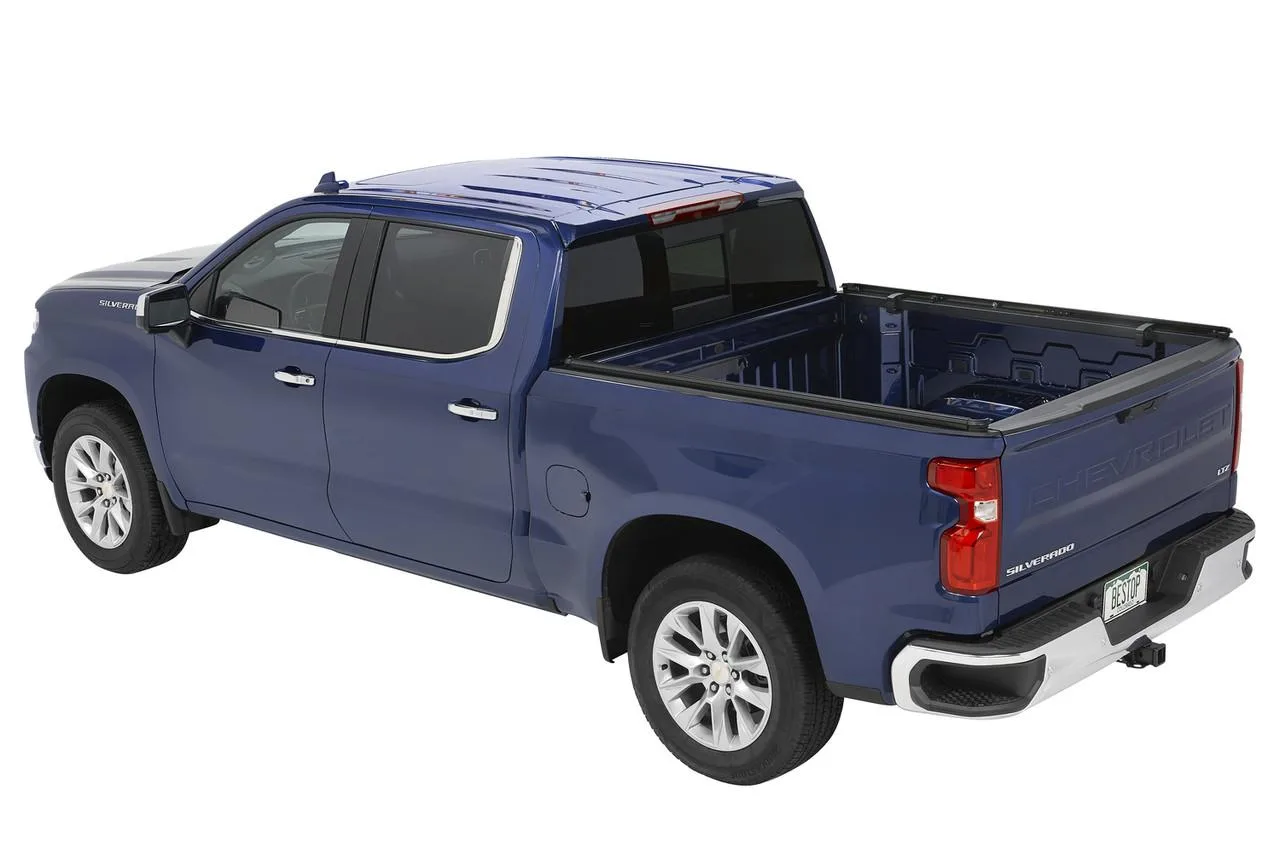
Security That Actually Stops Break-Ins
Soft toppers rely on fabric and zippers—materials a motivated thief can slice through in seconds. You’re not just risking tools or gear; you’re leaving everything visible and accessible through vinyl windows.
Fiberglass walk-in caps eliminate that vulnerability completely. ARE caps use one-piece molded construction with keyed locking handles on every access point. The shell itself is reinforced composite material designed to resist prying, and the integrated locking system ties directly into your truck’s factory key.
If you keep work tools, camping equipment, or anything you can’t afford to replace overnight in your bed, the difference isn’t subtle. A walk-in cap turns your truck bed into a true secure cargo area—not just a covered space.
Weather Protection You Can Count On Year-Round
Soft toppers stretch, sag, and develop gaps as the fabric ages. Rain finds its way through seams, dust works into every crease, and winter cold turns vinyl brittle. You end up treating the topper like temporary coverage instead of real protection.
Fiberglass caps seal to your truck bed with bulb-style weather stripping that stays compressed and flexible across temperature swings. The solid roof doesn’t flex or flap in wind, and the one-piece construction means there are no seams to fail over time.
We’ve tested our caps in everything from desert heat to mountain snow, and the seal performance doesn’t degrade the way fabric inevitably does. If you need your truck to work in all four seasons—not just fair-weather weekends—a fiberglass shell handles it without compromise.
Long-Term Value vs. Replacement Cycles
A soft topper’s lower purchase price looks appealing until you factor in replacement. Fabric degrades, zippers break, and most owners are shopping for a second topper within three to five years. You’re not saving money—you’re paying twice.
ARE fiberglass caps last decades with basic maintenance. The molded composite won’t rot, tear, or fade the way vinyl does, and the structural components are built to handle daily use without wearing out. We see caps in service for fifteen, twenty years or more—still sealing, still locking, still protecting cargo like new.
The upfront investment is higher, but the cost per year of ownership drops below what you’d spend cycling through disposable soft toppers. If you plan to keep your truck for the long haul, the math favors a permanent solution. For keeping your gear organized and powered during longer trips, something like a compact battery storage system pairs well with the additional secure interior space a walk-in cap provides.

Walk-In Access vs. Tailgate-Only Designs
One of the biggest practical differences you’ll notice switching from a soft topper to an ARE walk-in cap is how you actually use the space. Soft toppers force you to crawl in from the tailgate or struggle with side zippers that never quite stay aligned.
Walk-in caps give you true side door access—often on both sides—with step-up handles and full-height openings. You can load and unload gear without climbing into the bed, reach items stored at the front without stretching, and access your cargo from either side of the truck depending on where you’re parked.
That difference matters most when you’re loading heavy tools, managing a job site, or packing camping gear in the dark. The side door access turns your truck bed into usable interior space, not just a compartment you have to dig through from one end. According to the Truck Trend analysis of truck bed cap benefits, walk-in access consistently ranks as the top quality-of-life upgrade for daily truck users.
Making the Right Choice for Your Truck
If you’re still comparing a Bestop Supertop alternative and trying to decide whether a fiberglass walk-in cap is worth the investment, the answer comes down to how you actually use your truck. Soft toppers work for weekend camping trips and light-duty coverage, but they’re not built for security, year-round weather, or long-term reliability.
ARE walk-in caps give you lockable hard-shell protection, weather sealing that lasts decades, and side-door access that changes how you load and manage cargo. The upfront cost is higher, but the value per year of ownership beats replacing soft toppers every few years—and you get real security in the process.
If your truck is a work vehicle, an adventure rig, or just something you plan to keep for the long haul, a fiberglass cap is the upgrade that actually pays off.
Common Questions About Switching from Soft Toppers to Fiberglass Caps
Yes—fiberglass caps install on the same bed rails as a soft topper, using the existing mounting points. You’ll remove the soft topper frame completely and mount the fiberglass cap directly to your bed.
ARE manufactures model-specific caps for every major truck platform, so fit is precise. Installation typically takes one to two hours with basic hand tools.
Fiberglass caps weigh more—usually 150 to 250 pounds depending on size and features, versus 50 to 80 pounds for a fabric topper. That’s still well within payload limits for any modern pickup, and the added weight sits low over the axle where it doesn’t affect handling.
The trade-off is worth it for the structural strength and security you gain. Most owners don’t notice the weight difference in daily driving.
Yes, but it’s not a quick process like dropping a soft topper. Fiberglass caps are designed to stay installed—removal usually requires two people and takes thirty to forty-five minutes.
If you frequently switch between capped and open-bed configurations, a soft topper might still make sense. But for most truck owners, the security and weather protection of a permanent cap outweigh the occasional need to haul something tall.
Actually, they’re easier. Soft toppers require regular cleaning to prevent mildew, UV protectant treatments to slow fabric degradation, and zipper maintenance to keep closures working.
Fiberglass caps need occasional washing and waxing—the same care you give your truck’s paint. The materials don’t degrade, so there’s no preventive maintenance schedule. Hinges and locks get a shot of lubricant once or twice a year, and that’s it.
Soft toppers typically last three to seven years before fabric tears, zippers fail, or UV damage makes them unusable. Fiberglass caps routinely stay in service for fifteen to twenty-plus years with no structural degradation.
The cap may outlast the truck itself—we’ve seen owners transfer their ARE cap to a new truck when they upgrade rather than buy a replacement.