
LEER 100XL vs LEER 180: Which Premium Fiberglass Truck Cap Offers Better Rear Door Access and Visibility?
Choosing between the LEER 100XL and LEER 180 often comes down to how you use your truck bed and what you need to see while driving. Both are premium fiberglass caps built on the same structural platform, but their rear door designs and window layouts create meaningfully different experiences for daily hauling, job site work, and weekend gear loading.
We’ve installed thousands of both models across every major truck platform, and the decision usually hinges on three factors: how often you need full rear access, whether you prioritize rearward visibility, and what kind of cargo you’re securing. This guide walks through the real-world differences so you can match the right cap to your actual workflow.
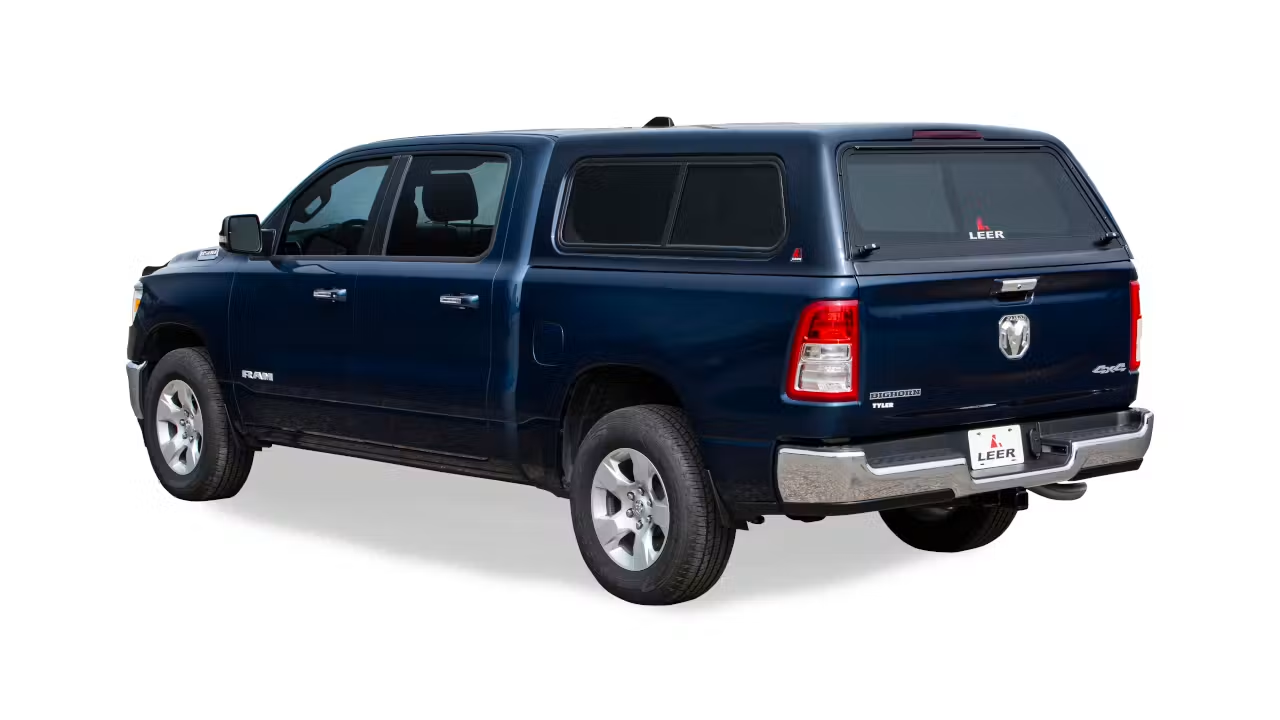
Rear Door Configuration: Lift Glass vs Full Barn Doors
The 100XL uses a single lift-up rear window with an integrated handle and strut support, while the 180 features full-height barn doors that swing open on external hinges. That structural choice changes how you interact with the bed every time you load or unload.
With the 100XL’s lift glass, you’re reaching over a lower sill to slide cargo in and out — fine for toolboxes, coolers, and anything you can push or pull horizontally, but limiting if you’re lifting heavy items or need to step into the bed. The 180’s barn doors open the entire rear aperture, letting you walk right up to the bed floor and lift straight up without contorting around a half-height opening.
Both designs seal against the same bulb weatherstripping and use LEER’s HD latching hardware, so water intrusion and security aren’t differentiators here. The trade is purely ergonomic: lower reach-over access vs full walk-up clearance.
Window Sight Lines and Rearward Visibility
The 100XL’s single-pane rear glass sits higher in the cap profile, giving you a continuous sight line through your cab’s rear window and out the back — you see traffic, backing obstacles, and parking lot movement with minimal obstruction. The 180’s barn door design splits the rear into two vertical panes with a center post, and the door frames sit lower, reducing the unobstructed viewing area when you glance in your rearview mirror.
For drivers who rely heavily on direct rearward visibility — city parking, tight loading docks, or frequent reversing without a backup camera — the 100XL’s uninterrupted glass often wins. If you already depend on side mirrors and cameras for backing and rarely use the rearview for anything beyond checking that the doors are closed, the 180’s sight-line trade doesn’t register as a daily inconvenience.
Side Window Placement
Both caps use the same side window templates and positions, so lateral visibility when changing lanes or checking blind spots is identical. The difference lives entirely in what you see behind you.
Build Quality, Finish, and Long-Term Durability
Both the 100XL and 180 share LEER’s HPG gel-coat fiberglass layup, the same aluminum framing at the door openings, and identical mounting clamp systems. You’re not choosing between a budget model and a premium one — these are the same tier, just configured differently.
The 180’s barn door hinges and dual latches add more moving parts and adjustment points than the 100XL’s single strut-and-latch glass, which means slightly more maintenance over time to keep the doors aligned and sealing evenly. We see 180 owners tweaking striker plates and hinge tension more often than 100XL owners adjusting their glass struts, though neither requires frequent attention if installed correctly.
Paint-match quality, UV resistance, and the structural integrity of the cap itself don’t vary between models. The same fiberglass resins and application process produce the same long-term finish performance, and both caps handle highway speeds, car washes, and sun exposure identically. If you’re replacing bed-access components like BakFlip folding tonneau covers with a hard-top solution, either cap delivers the same protective upgrade in material terms.

Loading Workflow and Cargo Type Considerations
Think through your most common loading scenario before deciding. If you’re sliding long items like lumber, pipe, or kayaks into the bed from the rear, the 100XL’s lift glass gives you the clearance you need without requiring the extra space behind the truck that barn doors demand when open.
If you’re lifting heavy boxes, tool chests, or equipment that you need to position carefully inside the bed, the 180’s full-height opening lets you step closer and use your legs rather than leaning over a sill. Contractors loading power tools, landscapers moving blowers and trimmers, and anyone frequently handling 50+ pound items usually prefer the barn door access.
Recreational users who load bikes, camping gear, or sports equipment split depending on how they pack — horizontal sliders lean toward the 100XL, vertical lifters toward the 180. According to Wikipedia’s overview of truck cap design, rear-access configuration has historically been the primary differentiation point within a single product line, dating back to early camper shell designs in the 1960s.
Clearance Behind the Vehicle
The 180 requires about 24 inches of clearance behind the bumper for the barn doors to swing fully open, while the 100XL’s lift glass only needs overhead clearance. Tight garage spaces or parking against a wall can make the barn door setup impractical for some users.
Matching Door Design to How You Actually Use Your Truck Bed
The LEER 100XL vs 180 decision isn’t about one being better — it’s about which rear-access pattern fits the way you load, unload, and see out the back of your truck every day. If you value unobstructed rearward visibility and mostly slide cargo horizontally into the bed, the 100XL’s lift glass delivers a cleaner sight line and simpler operation. If you’re lifting heavy items or need to step up into the bed regularly, the 180’s full barn door opening makes that work less awkward and safer for your back.
Both caps use the same fiberglass construction, the same finish quality, and the same long-term durability, so you’re not trading off build quality or weather protection to get one door style over the other. Walk through your last ten loading sessions mentally and count how many would’ve been easier with full-height access versus how many times you checked your rearview mirror — that ratio usually makes the right choice obvious.
Common Questions About LEER 100XL and 180 Rear Access and Sight Lines
Yes, both caps accept LEER’s factory roof rack system using the same mounting points molded into the fiberglass. Weight capacity and track placement are identical across both models, so roof-load capability isn’t a deciding factor between them.
Both use the same rotary paddle latches and can be keyed to match your truck’s ignition. The 180’s barn doors have two separate latch points instead of one, but in practice neither design has shown a meaningful security advantage over the other. A determined thief will target the side windows on either cap rather than the rear latches.
The 100XL and 180 use identical clamp mounting systems and weigh within a few pounds of each other, so removal difficulty is the same. You’ll need a second person and about 15 minutes either way. Neither is designed for frequent on-and-off use the way a tonneau cover is.
No measurable difference in wind noise at highway speeds. Both caps have the same roofline profile and front slope angle, and the rear door configuration doesn’t create different aerodynamic effects. Any wind noise you hear will come from the same sources: gaps in the weatherstripping or the cap not sitting flush on the bed rails.
LEER doesn’t offer a center-latch barn door option on the 180. The side-hinge design is the only configuration available. If you want center-opening rear access, you’d need to look at a different cap model entirely, which changes more than just the door setup.
Neither the 100XL nor the 180 includes LED lighting in the base configuration. Interior lights are an available add-on for both models at the same price, wired into your truck’s cargo light circuit. The barn door design on the 180 doesn’t affect light placement or wiring difficulty.